Speaker
Description
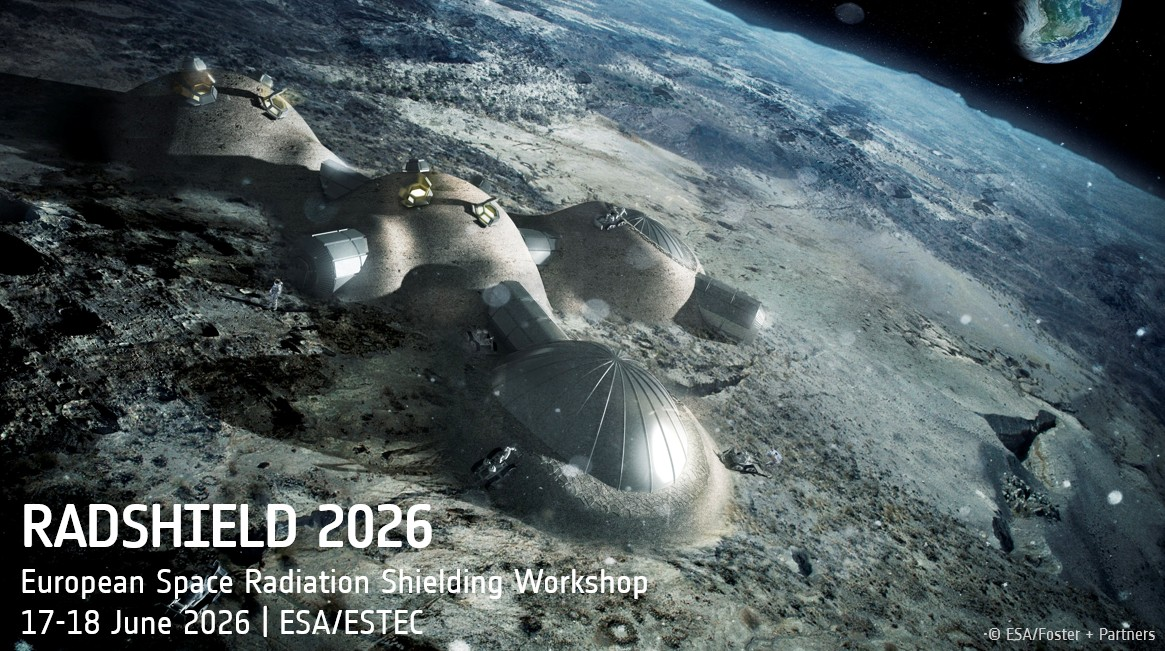
Exploration of the Moon is a primary target for human space flight in the near future. A limiting factor for crewed missions is the radiation exposure of the astronauts on the lunar surface. While the total dose for extended missions is expected to be dominated by the galactic cosmic radiation, the potential occurrence of large solar energetic particle events may lead to severe short-term effects. This work investigated the expected dose rates for maximum galactic cosmic radiation intensity and the total dose from several historical solar energetic particle events, including the NASA reference event, through the application of numerical simulations with the Geant4 Monte-Carlo framework. An evaluation of the shielding effect of lunar regolith was carried out. For the solar particle events a shielding of more than 4 g/cm2 of regolith would reduce the expected dose to below the current 30-day limits. For galactic cosmic radiation adding additional mass shielding did not reduce the absorbed dose significantly. The estimated total dose equivalent received utilizing around 180 g/cm2 of regolith amounted to 200 mSv/year, which is about 35% below the corresponding estimates for an unshielded environment (Matthiä and Berger, 2024).