Speaker
Description
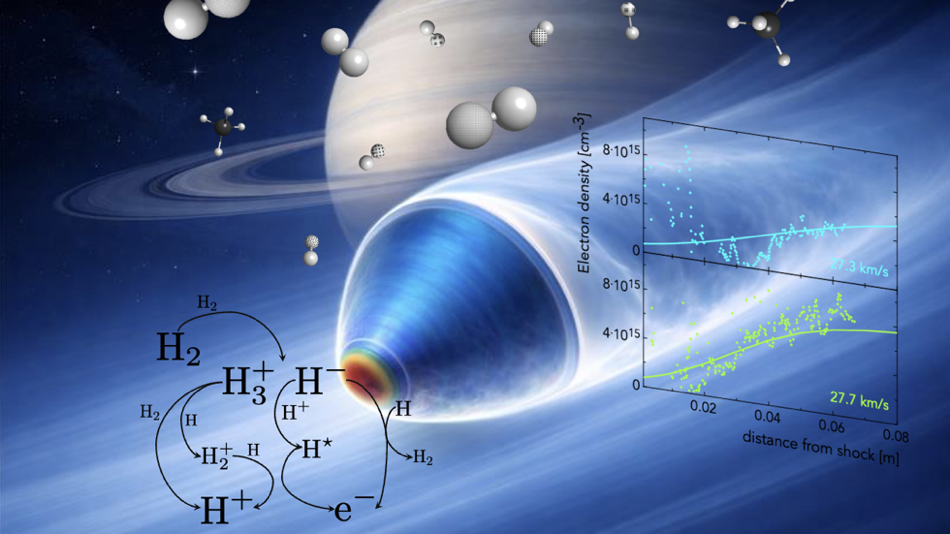
Test gas substitution offers the ability to overcome the total enthalpy limitations of ground test facilities and increase the temperature range over which hydrogen thermochemistry can be studied. The substitution involves modifying the nominal H2–He mixture by substituting He with Ne and/or increasing the fraction of diluent gas in the initial mixture. Such a modification decreases the specific heat capacity of the mixture and allows higher temperatures to be reached for a given incident shock speed. Similarity between substituted flows based on the theory of binary scaling has been proposed in the literature, however the extent of the similarity, and the validity of the underpinning assumptions, have never been rigorously reviewed. We performed a systematic study of similarity between flows with different initial H2 fractions (𝑟), and flows with matching 𝑟 but Ne used in place of He. We show analytically that a direct non-equilibrium scaling between flows with different 𝑟 is not possible because of the different sizes of the third-body pool, a violation of the requirements of binary scaling. We find that, in cases of a 1:1 Ne for He substitution, the increased molar mass of the Ne atom can change the behaviour of second-order flow processes such as diffusion and conduction that affect the similarity, but not strongly for the test cases analysed. Forced recombination due to an isothermal wall boundary condition and optical thickness of the H–𝛼 are shown to be likely responsible for discrepancies observed in the literature. We conclude that the substitution is valuable method for the study of high-temperature hydrogen thermochemistry, but the expected region of similarity should be strictly defined to ensure that substituted conditions are useful.
Summary
As above.