Conveners
High speed facilities, flight testing and propulsion: Thursday morning 2
- Kohei Shimamura (Tokyo Metropolitan University)
High speed facilities, flight testing and propulsion: Friday morning
- Ajmal Mohamed (Onera)
-
Matthew Mcgilvray (University of Oxford)24/09/2026, 11:00High Speed Facilities, Flight Testing and Propulsion
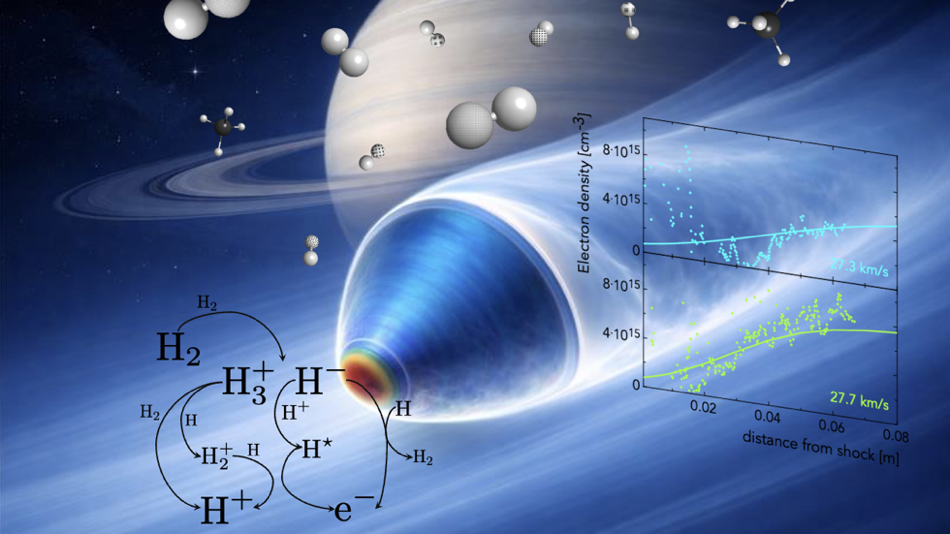
Test gas substitution offers the ability to overcome the total enthalpy limitations of ground test facilities and increase the temperature range over which hydrogen thermochemistry can be studied. The substitution involves modifying the nominal H2–He mixture by substituting He with Ne and/or increasing the fraction of diluent gas in the initial mixture. Such a modification decreases the...
Go to contribution page -
Mario Lino da Silva (Instituto de Plasmas e Fusão Nuclear - Instituto Superior Tecnico)24/09/2026, 11:30High Speed Facilities, Flight Testing and Propulsion
On November 2025, ESTHER carried out its first shot in full operational configuration, reaching an estimated velocity of 8km/s. Since then the operational acceptance tests have been ongoing, validating several design choices, yet highlighting a series of flaws in the design that have been under correction during this acceptance campaign, which is scheduled to close at the end of 2026.
This...
Go to contribution page -
Brett Cruden (AMA Inc/NASA Ames)25/09/2026, 11:00High Speed Facilities, Flight Testing and Propulsion
At the previous RHTG meeting, we presented the history, initial design and construction of the Low Density Shock Tube (LDST), part of the Electric Arc Shock Tube (EAST) facility at NASA Ames. Since this meeting the LDST has become operational with one completed test series performed for Dragonfly entry to Titan and a second test series planned for comparing to shock radiation data in air...
Go to contribution page -
Chris James (The University of Queensland)25/09/2026, 11:30High Speed Facilities, Flight Testing and Propulsion
The X2 expansion tube at the University of Queensland (UQ) is a long-running, high-enthalpy facility for planetary entry simulation, capable of reproducing conditions across all major planetary atmospheres at speeds up to 20 km/s. To meet increasing demands for higher fidelity and broader condition coverage, X2 is currently undergoing a comprehensive upgrade program aimed at expanding...
Go to contribution page -
Sergio Cassese (University of Naples "Federico II")25/09/2026, 12:00High Speed Facilities, Flight Testing and Propulsion
The rapid growth of small-satellite and CubeSat missions has increased the demand for compact propulsion systems capable of providing safe, flexible, and reliable in-space maneuvering capability. Mission scenarios involving orbit insertion, formation flying, constellation reconfiguration, collision avoidance and de-orbiting require propulsion technologies that can be integrated within highly...
Go to contribution page